Structural Steel Inspection for House Construction: Understanding Fe 500 vs. Fe 500D
A practical guide for homebuilders on selecting reinforcement steel bars, understanding ductility in earthquake zones, and checking rib patterns before pouring concrete.
What Does Fe 500D Mean in House Construction?
When planning reinforcement steel for your residential columns, beams, and roof slabs, you will encounter designations like Fe 500 and Fe 500D. 'Fe' stands for iron, and '500' indicates that the steel withstands a minimum yield stress of 500 Newtons per square millimeter.
The letter 'D' stands for Ductility. High ductility means the rebar can absorb bending strain before failure. In seismic regions like Northern India (Delhi NCR and surrounding areas), ductile steel enables a building frame to absorb lateral vibrations without sudden brittle failure.
Site Quality Checks Before Pouring Concrete
1. Brand Stamp & Grade: Ensure every rebar has the manufacturer brand name and 'Fe 500D' embossed continuously along its length.
2. Distinct Rib Pattern: Look for clean, sharp, uniform ribs that mechanically lock into concrete. Flattened ribs reduce bonding strength.
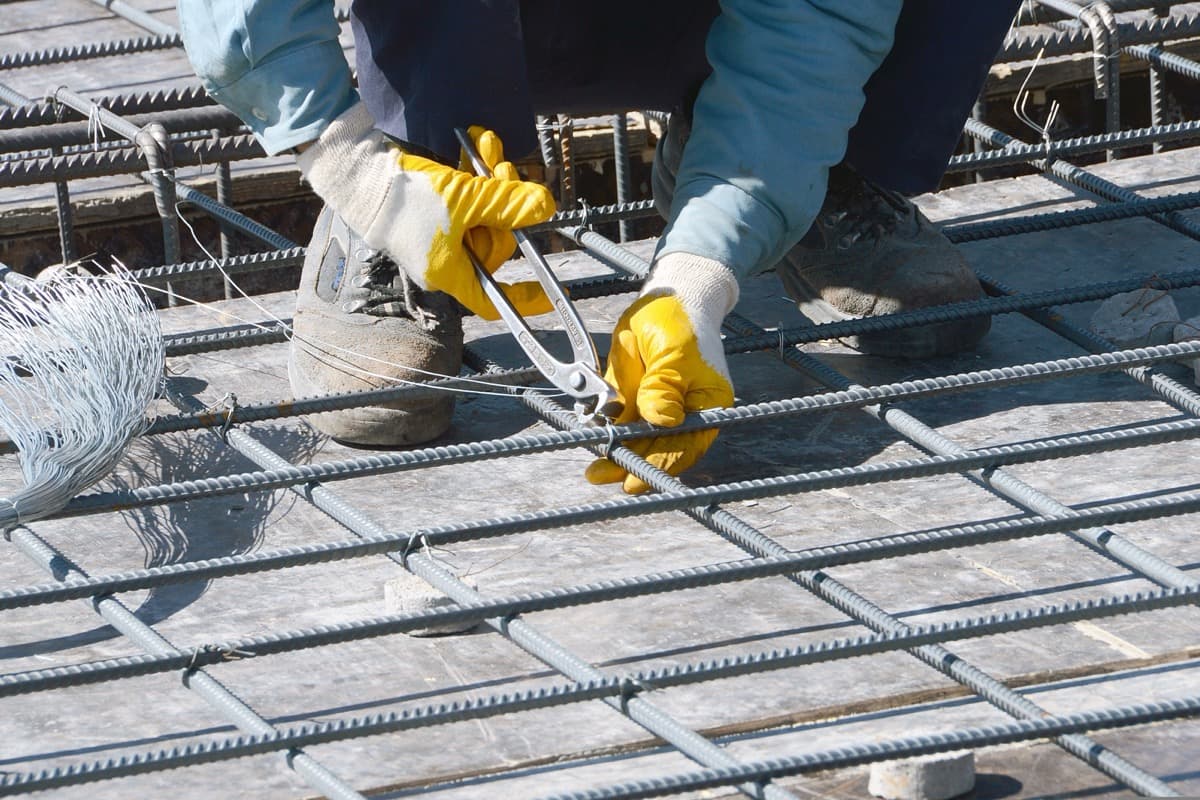
3. Proper Binding Wire: Rebars at column and beam junctions must be securely tied with 18-gauge annealed binding wire to keep reinforcement in place during mechanical vibration.
4. Concrete Cover Detailing: Maintain proper concrete cover under slab and beam rebar mats per IS 456 to prevent exposed steel from corrosion.
Site Storage & Protection
Store steel rebars raised above damp ground using timber battens, and keep them sheltered with waterproof covers to prevent excessive rust scaling prior to casting.